Driver fatigue management: your legal duty explained

Under the Heavy Vehicle National Law, you must not drive a fatigue-regulated heavy vehicle while impaired by fatigue. That’s the law, plain and simple, and it applies whether you’re behind the wheel or managing the roster back at the depot. The NHVR sets the rules, and WorkSafe backs them up with training and codes of practice in most states.
If you’re tired on the road, three things happen in this order:
- Stop as soon as it’s safe. Don’t push through.
- Record the stop in your work diary or Electronic Work Diary if you’re required to carry one.
- Notify your supervisor or record keeper so the business can adjust the schedule.
Driver fatigue management isn’t a box you tick once a year. It’s a daily discipline that sits on top of rostering, health, and record keeping, and this guide walks through exactly what the rules require and how to meet them without drowning in paperwork.
Key Takeaways
Driver fatigue management works when regulatory compliance, sound rostering, and honest reporting operate together, not as separate obligations.
| Point | Details |
|---|---|
| Legal duty is non-negotiable | You must not drive a fatigue-regulated heavy vehicle while impaired by fatigue under the HVNL. |
| Work diaries have clear triggers | Carry a diary past 100 km on Standard Hours, or always under BFM or AFM. |
| Records need three years’ retention | Keep diaries, rosters, and training records accessible for NHVR audits. |
| Roster design beats reactive fixes | Protect sleep windows and limit consecutive night blocks before problems start. |
| Digital tools cut the admin load | Platforms like Dirt Champ centralise pre-starts, dockets, and GPS visibility to support the controls above. |
Table of Contents
- Work and rest requirements under the HVNL
- Work diary and EWD: when you need one and how to keep it accurate
- BFM and AFM accreditation: what they allow and what they cost you
- Record keeping and audits: what to keep, for how long
- Practical fatigue controls you can apply today
- Technology and monitoring: what actually helps
- Training and chain of responsibility: who’s on the hook
- Where to find official help right now
- Beyond the checklist: what actually prevents fatigue events
- How Dirt Champ takes the admin out of fatigue compliance
- Sources
Work and rest requirements under the HVNL
Standard Hours set the baseline most solo drivers work to. In broad terms, that means capped daily and weekly driving windows paired with minimum rest breaks, including a longer continuous rest period at night to protect sleep opportunity. The NHVR counts “work time” broadly. It’s not just time behind the wheel. Loading, unloading, and other work duties for the business count too, which catches out operators who only track driving hours and ignore the rest.
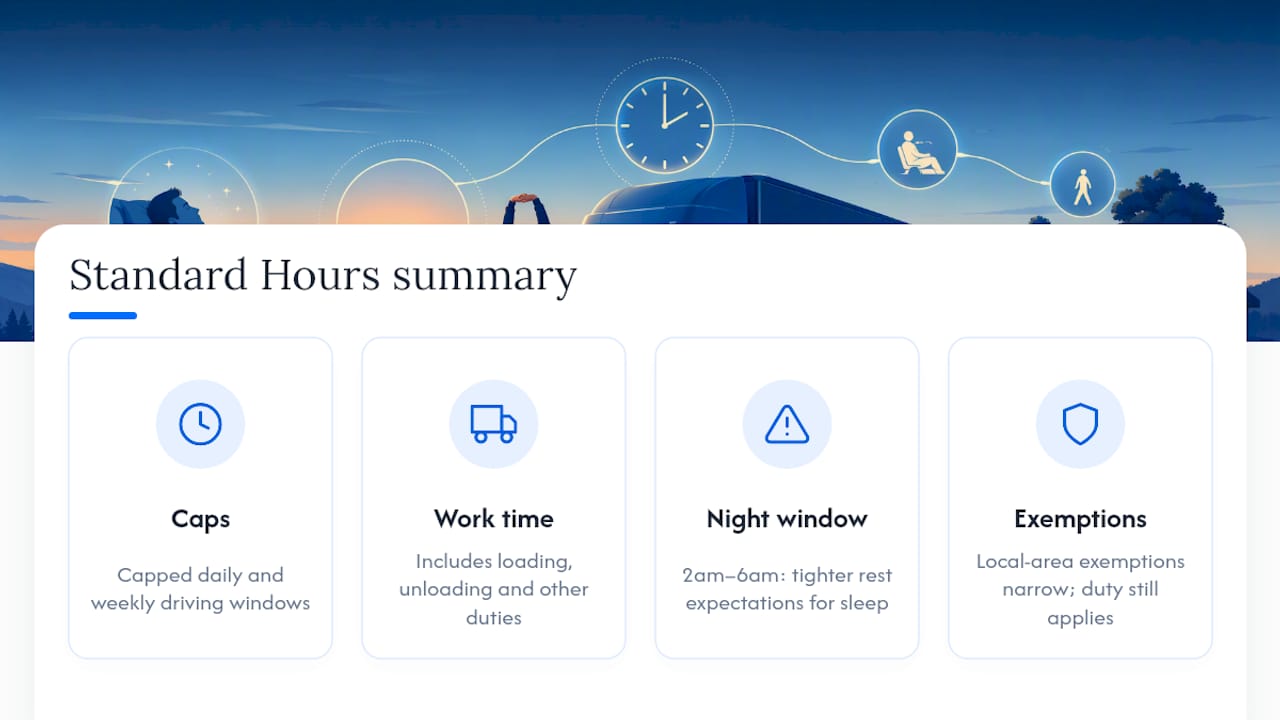
Night driving carries tighter rest expectations because your body’s circadian rhythm fights you hardest between roughly 2am and 6am. A driver who’s technically within their hours but running through that window on broken sleep is still a fatigue risk, even if the diary looks compliant on paper.
Local-area exemptions exist for certain short-haul work within defined zones, but they’re narrow. They don’t switch off the fundamental duty not to drive fatigued, and they don’t apply automatically just because a trip feels routine. If you’re unsure whether an exemption applies to your run, treat the standard limits as binding until you’ve checked with the NHVR directly.
Work diary and EWD: when you need one and how to keep it accurate
If you’re on Standard Hours and travel more than 100 km from your base, you must carry a National Driver Work Diary or an approved Electronic Work Diary. Drivers accredited under BFM or AFM need a diary regardless of distance travelled.
Each day’s entry needs your start time, work and rest periods, and odometer readings. If your diary is lost or damaged, supplementary written records can cover the gap, but they need to be detailed enough to reconstruct your day.
A few habits save you grief at audit time:
- Start each diary day at midnight, not at your actual start time, to keep entries aligned with the regulator’s counting method.
- Keep copies legible. Faded pages or smudged handwriting are a common reason records get rejected.
- Hand diaries to your record keeper promptly so they’re archived before you need them for an audit.
Pro Tip: Photograph completed diary pages at the end of each shift and store them in a shared folder. If the physical copy goes missing, you’ve still got proof.
BFM and AFM accreditation: what they allow and what they cost you
Basic Fatigue Management gives you more flexible hours than Standard Hours, in exchange for tighter operator controls around scheduling and rest. Advanced Fatigue Management goes further. It’s the only pathway under the HVNL that lets you tailor work and rest hours using a genuine risk-based approach, rather than a fixed schedule template.
Both accreditations demand a documented Fatigue Management System, driver training, and regular audits. That’s not optional paperwork. It’s the evidence base the NHVR uses to decide whether your flexibility keeps being earned.
Switching between modules needs care. Reverting from AFM back to Standard Hours, for example, typically requires a rest period, often around 48 hours, before the new limits apply cleanly. Get the changeover date wrong and you can inadvertently breach the very rules you’re trying to follow.
Record keeping and audits: what to keep, for how long
Operators need to retain diaries, rosters, trip schedules, training records, and driver medical certificates for the three years the NHVR requires for audit and investigation purposes. A designated record keeper, often a compliance manager or business owner, holds these and must be able to produce them on request.
Audits aren’t always random. Triggers include incident investigations, complaints, or a scheduled NHVAS review if you’re accredited. Records that are incomplete, illegible, or scattered across someone’s glovebox rather than centrally filed are the single biggest reason operators fail an audit that they otherwise would have passed.
Practical fatigue controls you can apply today
Compliance with the hours is the floor, not the ceiling. Fatigue is shaped by shift timing, workload, and environment as much as by raw hours driven, according to human factors research on transport fatigue, which is why two drivers with identical logbooks can arrive at work in very different states.
Start with roster design:
- Protect genuine sleep opportunity by rostering consistent start times where possible.
- Limit consecutive night blocks, and avoid quick turnarounds where a driver finishes a late shift and returns for an early one the next day.
- Stagger start times across the fleet so dispatch isn’t rushing everyone out the gate at once.
In-shift, encourage scheduled breaks rather than driving until the legal limit forces one. A 20-minute strategic nap during a break genuinely restores alertness, and timing caffeine around it (rather than instead of it) extends the benefit. Hydration matters more than most drivers rate it. Mild dehydration measurably worsens reaction time. Make safe pull-over spots part of route planning, not an afterthought.
On health, encourage drivers to get screened for sleep apnoea if they’re waking unrefreshed, and build a workplace culture where reporting fatigue doesn’t cost anyone a shift or a reputation. Simple lifestyle adjustments around sleep hygiene and diet also help drivers manage energy levels outside work hours.

Pro Tip: Ask drivers to rate their fatigue on a simple 1 to 5 scale at shift start. It takes ten seconds and gives supervisors an early warning long before a diary entry would.
Technology and monitoring: what actually helps
An Electronic Work Diary has to carry NHVR approval to satisfy your legal record-keeping duty. A generic telematics app or fleet tracker, however good, doesn’t replace an approved diary if you’re required to carry one.
Fatigue and Distraction Detection Technology can genuinely catch early warning signs like eye closure or lane drift. In practice, though, these systems throw up false positives often enough that operators need a clear human-checking protocol, or drivers start tuning out the alerts altogether.
Where digital platforms earn their keep is in the boring, high-value stuff: automating diary checks, flagging roster clashes before they become breaches, and giving supervisors live visibility of where the fleet actually is. A platform like Dirt Champ that connects pre-starts, dockets, and GPS tracking into one view can cut the admin load that otherwise eats into the time you’d spend actually managing fatigue risk properly.
Training and chain of responsibility: who’s on the hook
Fatigue management is a shared duty, not just a driver problem. The NHVR is explicit that every party in the chain, from schedulers to consignors, must do everything reasonably practicable to prevent breaches.
Expected competencies differ by role:
- Drivers need to understand work diary rules and recognise their own fatigue signs.
- Schedulers need training in counting time and building rosters that don’t force breaches.
- Supervisors need to know when and how to intervene if a driver reports fatigue.
Approved units and courses are available through registered training organisations and industry bodies. Keep training certificates on file alongside your other compliance records. They’re often the first thing an auditor asks for.
Where to find official help right now
Start with the NHVR’s fatigue management hub and its work diary page for the rules themselves. WorkSafe’s free training modules cover awareness for drivers and supervisors. If you’re feeling pressured to drive fatigued, the Heavy Vehicle Confidential Reporting Hotline exists for exactly that. This week: review one roster, check one diary, book one training session.
Beyond the checklist: what actually prevents fatigue events
Compliance is the floor, not the strategy. The operators who avoid fatigue incidents invest in roster design and health screening long before an auditor ever asks for a diary. I’ve seen dispatch and drivers coordinate on a late-running job, pushing the return leg to the next morning instead of forcing a night drive. That call, not the paperwork, is what stopped an incident.
— Mike
How Dirt Champ takes the admin out of fatigue compliance
Dirt Champ is the practical answer to the paperwork problem this article just walked through: instead of chasing paper diaries and separate GPS units, you get pre-starts, dockets, and live vehicle tracking in one place, without complicated installs.
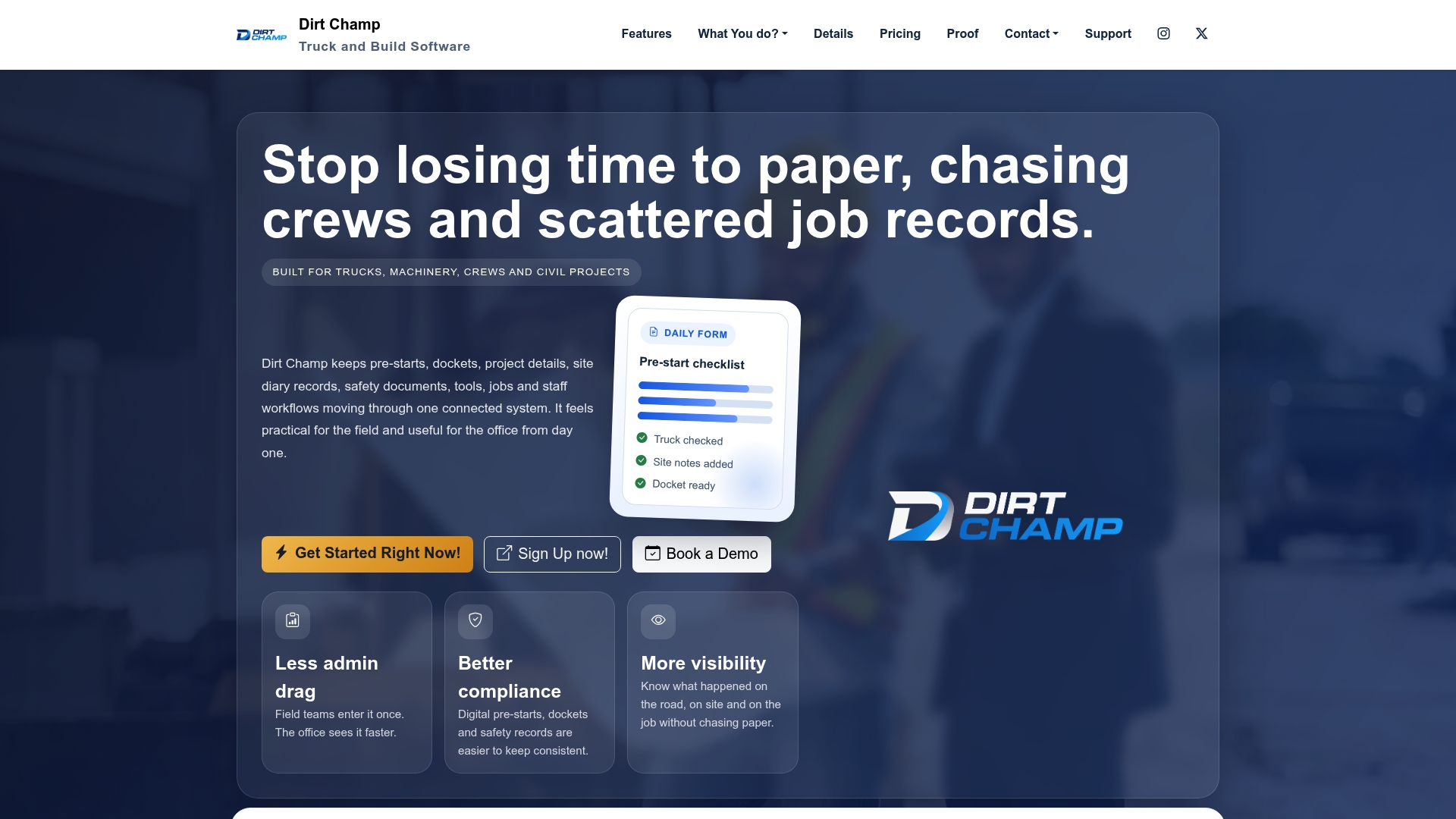
For a supervisor juggling rosters across a dozen trucks, that means roster clashes and diary gaps show up before they become an audit headache, not after. GPS tracking runs straight off the vehicle’s OBD port, so there’s no wiring project involved, and your compliance records sit centrally instead of scattered across gloveboxes and spreadsheets. It’s built for the truck and civil industry specifically, so it fits alongside the fatigue controls and record-keeping duties covered above rather than adding a separate system to manage. If you’re ready to see how it handles your fleet’s day-to-day compliance load, book a demo with Dirt Champ and take a look at what your roster and diary visibility could look like next week.
Sources
- Duties for managing fatigue and fitness to drive | NHVR
- Counting time and fatigue accreditation overview | NHVR
- WorkSafe fatigue management training for commercial drivers